NOTE 005 / WATER / 5 MIN READ
Stones & small patterns.
Practice looking at one modest subject.
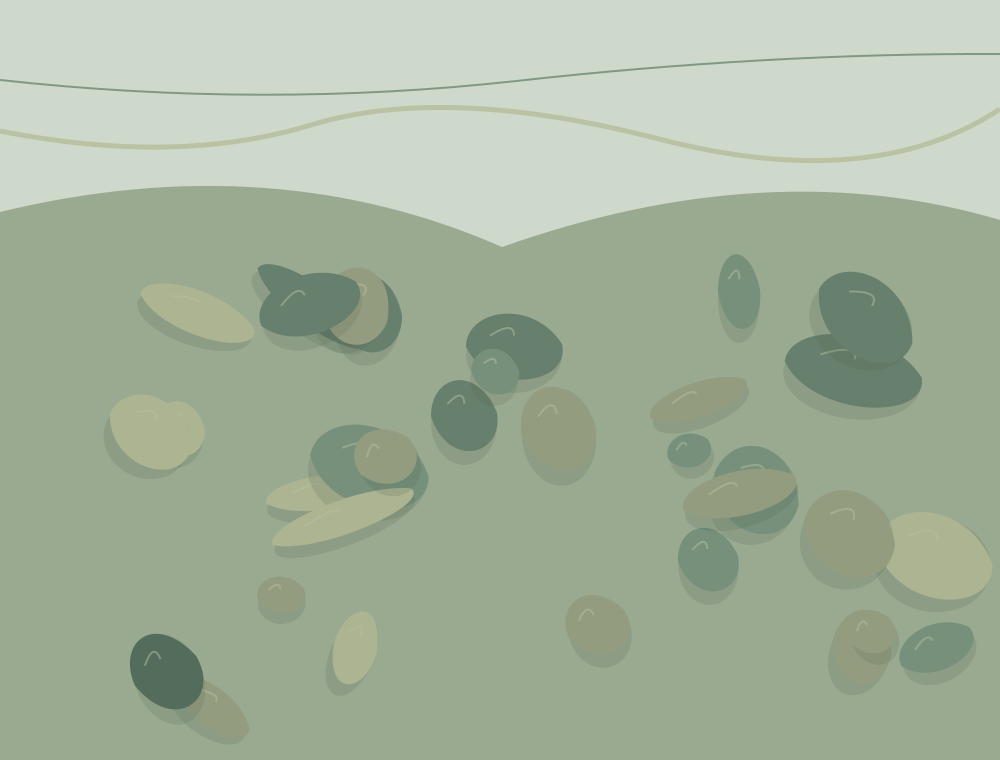
Pebbles invite a particular kind of attention. Their broad shapes are simple, but the colours and textures inside those shapes are not. You can study them without collecting them: choose a small patch, crouch where it is safe, and let the drawing stay incomplete.
Group before you detail
Look for a few large relationships. Is the patch mostly light or dark? Do the longest stones point in similar directions? Draw three or four outlines that establish those relationships before you add any spots or cracks. Negative space between the stones is part of the pattern too.
Use fewer marks
A dark edge and a small shaded patch may be enough to show that one stone sits above another. Try leaving the middle of each shape open. If the drawing becomes busy, choose one stone for detail and simplify the rest. Attention does not have to mean equal detail everywhere.
Leave the place as you found it
Keep stones, plants, and other natural materials in their setting, especially where local rules prohibit collecting. If you move a small fallen object for a sketch, return it carefully. A photograph or a page of notes is enough to bring the observation home.
TRY THIS ON YOUR NEXT PAGE
Draw a group of five stones with no shading. Add a single shadow only after the spaces between them feel right.