NOTE 002 / WOODLAND / 5 MIN READ
The shape of ordinary leaves.
A closer look at what is already beside you.
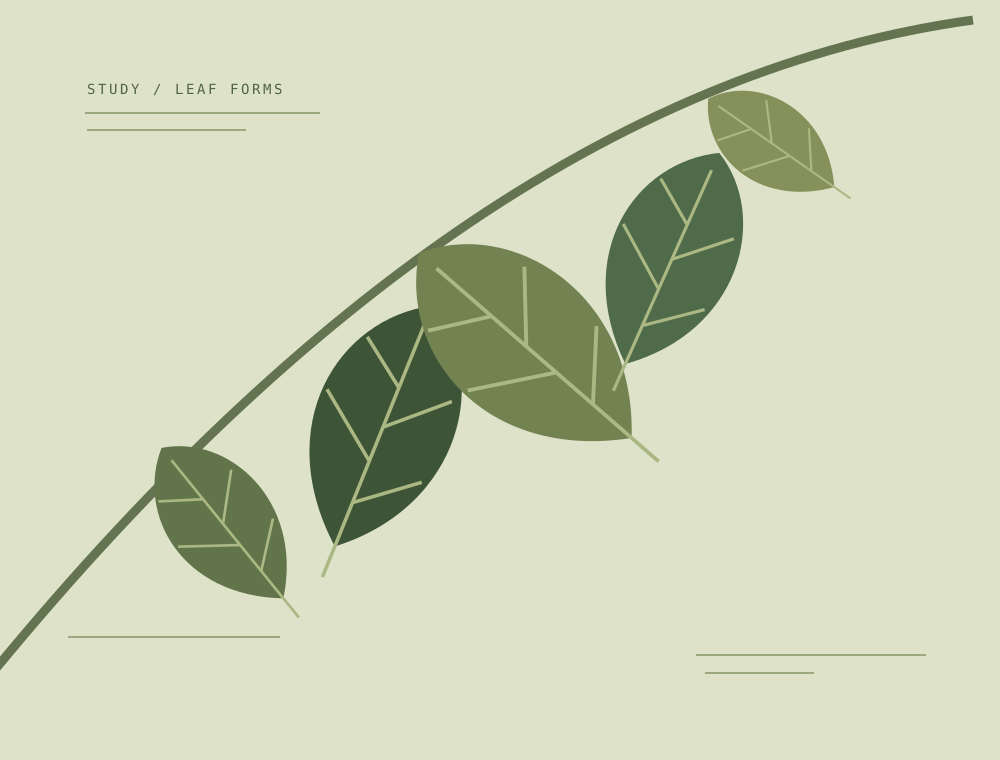
A leaf is an approachable subject because it is small enough to study without trying to take in the whole landscape. Begin with a fallen leaf you can observe where it lies, or look at a living leaf without removing it. Shape is a good first question; identity can come later.
Find the outline first
Imagine a box around the leaf. Is it long and narrow, nearly round, or widest near one end? Draw that broad proportion before the tiny teeth along the edge. A simple outline that holds the right shape says more than a detailed outline built on the wrong proportions.
Follow one vein
Notice the line that connects the stalk to the tip. Watch how smaller veins branch from it, and whether they reach the edge or curve away. Do not draw every vein. Choose a few that explain the structure, and leave the rest as something you have noticed rather than something you must copy.
Leave room for uncertainty
Two leaves on the same plant may look different. Light, age, and damage all change the subject. Record the setting and note what you are unsure about. If you later use a field guide, treat your sketch as evidence to compare rather than a substitute for careful identification.
TRY THIS ON YOUR NEXT PAGE
Sketch the same leaf twice: once in thirty seconds, then again in three minutes. Circle one detail you only noticed the second time.