NOTE 001 / WATER / 6 MIN READ
Reading a river, slowly.
Notice the water before you follow the path.
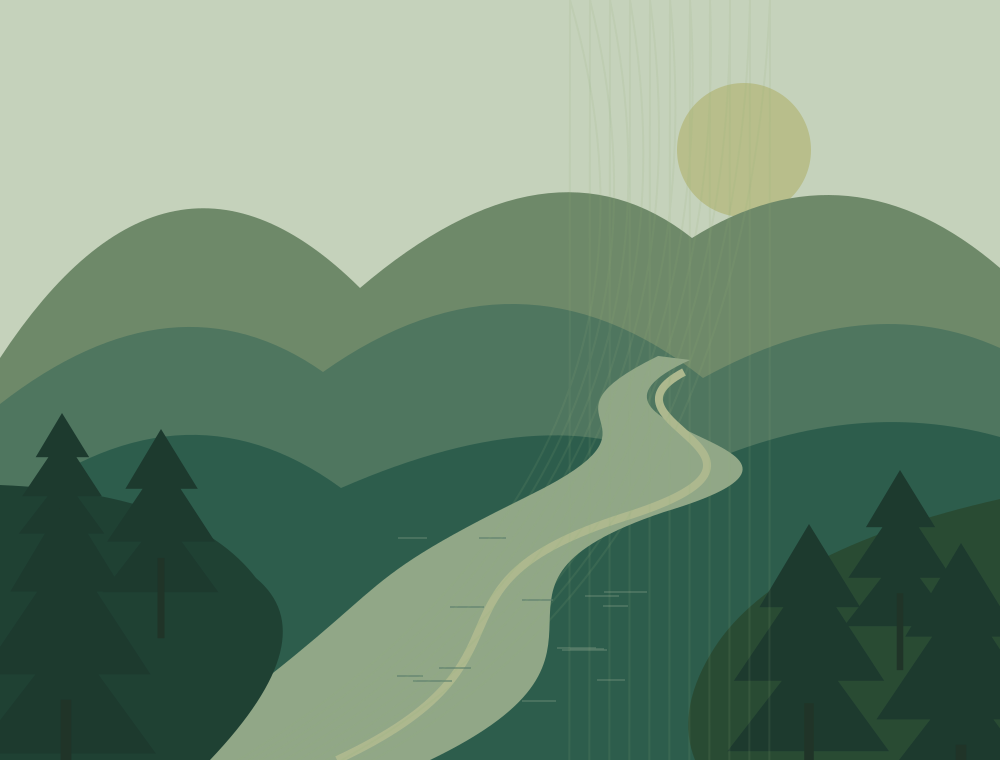
A river looks like one continuous movement from a distance. Stand still beside it and that movement breaks into smaller patterns: a fast seam, a quiet patch, a reflection that holds for a second before changing. There is no need to name everything to begin noticing it.
Begin with the edges
The centre of the channel is often the first thing we look at, but the edges tell a different story. Watch where leaves collect behind a stone or a bend. Compare that still patch with the surface a few metres away. Sketch the boundary between them rather than trying to draw the whole river.
Separate light from movement
A bright streak may be a reflection rather than a change in the water. Shift your position slightly and see which shapes move with you. Then choose one fixed point on the bank and watch what passes it. A short sequence of observations is more useful than a confident first guess.
Make a small record
Write the time, cloud cover, and what you can see from your standing place. Add three words for the surface: broken, glassy, folded, dark. Revisit the same view later and compare the words. Stay on a stable path, keep back from the water, and avoid stepping onto undercut banks.
TRY THIS ON YOUR NEXT PAGE
Draw one bend using only five lines. Mark one place where the water appears faster and one where it appears slower.